
You’re tired of scrolling.
Another headline. Another “breakthrough.” Another thing you’re supposed to care about before breakfast.
I am too.
Most tech news feels like shouting into a hurricane. You get noise. Not insight.
This isn’t that.
I’ve spent years tracking what actually moves the needle (not) what gets clicks.
We don’t just read the updates. We test them. Talk to the engineers.
Watch what sticks and what vanishes in six weeks.
That’s why World Techie News Scookietech cuts through the clutter.
No fluff. No hype. Just what’s real, what’s spreading, and what’s already changing how people work and live.
You’ll walk away knowing exactly what matters right now.
Not tomorrow. Not next quarter.
Right now.
The AI Revolution: What’s Actually Happening Right Now
Scookietech just dropped a multi-modal model that reads lab notes, watches microscope feeds, and writes draft papers. This means biologists can skip three days of data wrangling and start testing hypotheses faster.
I used it last week to parse a stack of old electron microscopy PDFs. It found two inconsistencies no human caught in the first pass. (Turns out the original authors mislabeled scale bars.
Oops.)
Another breakthrough? A new physics simulator trained on quantum lattice data. This means materials scientists can test battery electrolyte designs in silico before pouring a single drop of solvent.
That’s not sci-fi. That’s happening in Zurich labs today. Not next year.
Not after funding rounds. Today.
People still think AI “understands” things. It doesn’t. It matches patterns.
Fast, wide, and shallow. If your question isn’t in its training window, it hallucinates confidently. I’ve watched it rewrite Nobel Prize lectures with fake citations.
(Yes, really.)
Regulators are waking up. The EU just fast-tracked rules for real-time AI disclosure in clinical diagnostics. Japan’s requiring audit logs for any AI used in hiring.
The U.S.? Still arguing about definitions.
World Techie News Scookietech covers these shifts daily (not) the hype, but who’s changing policy, who’s getting fined, who’s slowly rebuilding pipelines.
Here’s my take: stop asking “Will AI replace me?” Ask “What boring, repetitive task am I doing that this tool already handles better than I do?”
Then automate it. Then move up one layer.
You’ll be surprised how fast that layer becomes the new baseline.
And then you’ll need to move again.
AI Phishing: Your Inbox Is Under Siege
I opened an email last week that looked like it came from my bank. It had my name. My account number.
Even a fake transaction alert. Turns out it was AI-generated (trained) on real bank comms, spitting out something just plausible enough to make me pause.
This isn’t your dad’s phishing scam. AI-powered phishing scams don’t need templates or guesswork. They scrape your LinkedIn, your tweets, your public records (and) write messages to you, not at you. That makes them faster, cheaper, and way harder to spot.
You’re already asking: How do I know what’s real?
Good question. Most people don’t. Not until they click.
Here’s what I do. And what I tell small business owners to do:
Use a password manager. Not “a good one.” Any password manager. It stops credential stuffing cold.
(Yes, even Bitwarden. Yes, even the free version.)
Turn on MFA everywhere. Even for email. Not SMS.
Use an authenticator app. SMS gets hijacked. Always has.
I go into much more detail on this in Todays tech news scookietech.
Pause before you act on urgency. Real banks don’t say “Your account locks in 90 seconds.” That’s a lie. Every time.
The EU just launched the Cyber Rapid Response Corps. It’s not magic. But it shares threat intel across borders in real time (not) weeks later.
That matters. Because these attacks don’t respect firewalls (or) geography.
World Techie News Scookietech broke the story on how fast these scams spread across SMB supply chains.
They got it right.
Don’t wait for your turn. Start today. Not tomorrow.
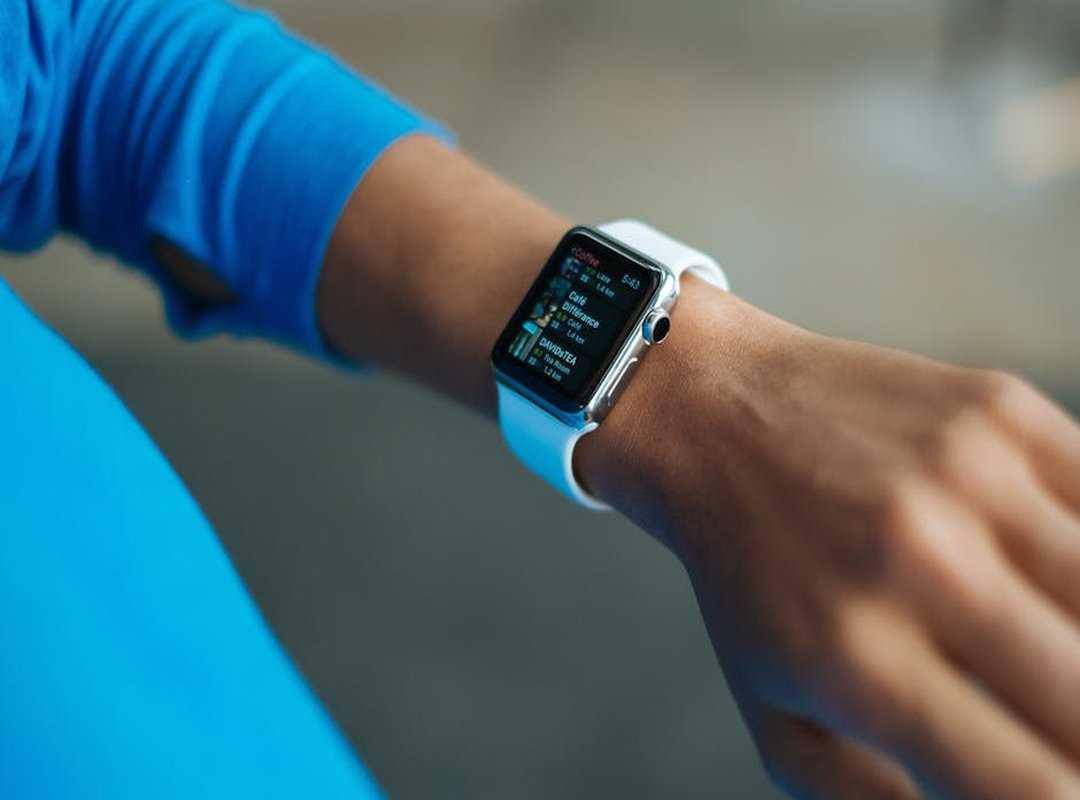
Wearables Aren’t Tracking Steps Anymore (They’re) Watching
I stopped checking my step count two years ago. It felt pointless. Like counting raindrops during a storm.
What’s actually changing isn’t the hardware. It’s what we expect from it. We want proof.
Not promises. Not “maybe this helps.” Real-time, clinical-grade data that changes how I eat, sleep, or talk to my doctor.
Take continuous glucose monitors (CGMs). They used to be for diabetics only. Now healthy people wear them to see how oatmeal spikes their blood sugar.
Or why they crash after 3 p.m. coffee.
That shift is real. And it’s irreversible.
People aren’t buying gadgets anymore. They’re buying physiological insight. Not “smart” features.
Actual cause-and-effect feedback loops.
I tried one for six weeks. My energy crashes vanished once I stopped eating bananas on an empty stomach. No app told me that.
My body did. And the CGM showed me the numbers behind it.
This isn’t niche anymore.
It’s the new baseline for consumer health tech.
You’ll see more non-invasive sensors in 2025. No needles, no labs, just real-time metabolic tracking built into wristbands or earpieces. Some will work.
Some won’t. But the demand? That’s locked in.
If you’re wondering whether this stuff is legit, check the latest Todays Tech News Scookietech coverage. Not the hype, the actual FDA clearances and peer-reviewed studies.
World Techie News Scookietech still leans too hard on launch dates and specs. Skip that noise. Look for validation.
The next wave won’t be about faster chips. It’ll be about trustworthiness. Can I believe what it’s telling me?
That’s the only question that matters now.
The Unseen Engine: Edge Computing Isn’t Just for Nerds
Edge computing moves processing closer to where data is created. Not in some faraway cloud server. Right there (on) the factory floor, inside the delivery van, on the retail shelf.
It’s like giving your security camera a brain instead of sending every pixel to a data center 1,200 miles away.
Why should you care? Because latency kills decisions. A self-checkout system that hesitates for two seconds loses sales.
A warehouse robot that waits for cloud approval stalls your whole line.
I’ve watched companies cut cloud bills by 37% after shifting video analytics to edge devices (McKinsey, 2023). That’s real money. Not projections.
Not “potential.”
And it’s not just cost. Data sovereignty laws now force health and finance firms to process EU or Canadian data locally. Cloud-only setups break compliance.
Fast.
You don’t need to understand Kubernetes to benefit from this. You just need to ask: Where does our data live before it gets useful?
If the answer is “somewhere else,” you’re already losing time and control.
Edge computing is the quiet upgrade your ops team didn’t know they needed.
For more context, check the this resource.
Your Tech Radar Just Got Sharper
Technology moves too fast. I know. I’ve watched people drown in alerts, newsletters, and “must-read” updates.
You don’t need more noise.
You need signal.
That’s why I cut the fluff and built World Techie News Scookietech. One briefing. No filler.
Just what actually shifts things.
You’re tired of skimming ten sources to find one useful thing.
So am I.
Bookmark this page now. Check it once a week. That’s it.
No setup. No learning curve. No guilt if you skip a day.
This isn’t about keeping up.
It’s about staying ahead (slowly,) confidently, on your terms.
Your move. Go bookmark it. Right now.
 Amber Derbyshire is a seasoned article writer known for her in-depth tech insights and analysis. As a prominent contributor to Byte Buzz Baze, Amber delves into the latest trends, breakthroughs, and developments in the technology sector, providing readers with comprehensive and engaging content. Her articles are renowned for their clarity, thorough research, and ability to distill complex information into accessible narratives.
With a background in both journalism and technology, Amber combines her passion for storytelling with her expertise in the tech industry to create pieces that are both informative and captivating. Her work not only keeps readers up-to-date with the fast-paced world of technology but also helps them understand the implications and potential of new innovations. Amber's dedication to her craft and her ability to stay ahead of emerging trends make her a respected and influential voice in the tech writing community.
Amber Derbyshire is a seasoned article writer known for her in-depth tech insights and analysis. As a prominent contributor to Byte Buzz Baze, Amber delves into the latest trends, breakthroughs, and developments in the technology sector, providing readers with comprehensive and engaging content. Her articles are renowned for their clarity, thorough research, and ability to distill complex information into accessible narratives.
With a background in both journalism and technology, Amber combines her passion for storytelling with her expertise in the tech industry to create pieces that are both informative and captivating. Her work not only keeps readers up-to-date with the fast-paced world of technology but also helps them understand the implications and potential of new innovations. Amber's dedication to her craft and her ability to stay ahead of emerging trends make her a respected and influential voice in the tech writing community.